B30
Solution for passenger road transport
About the project
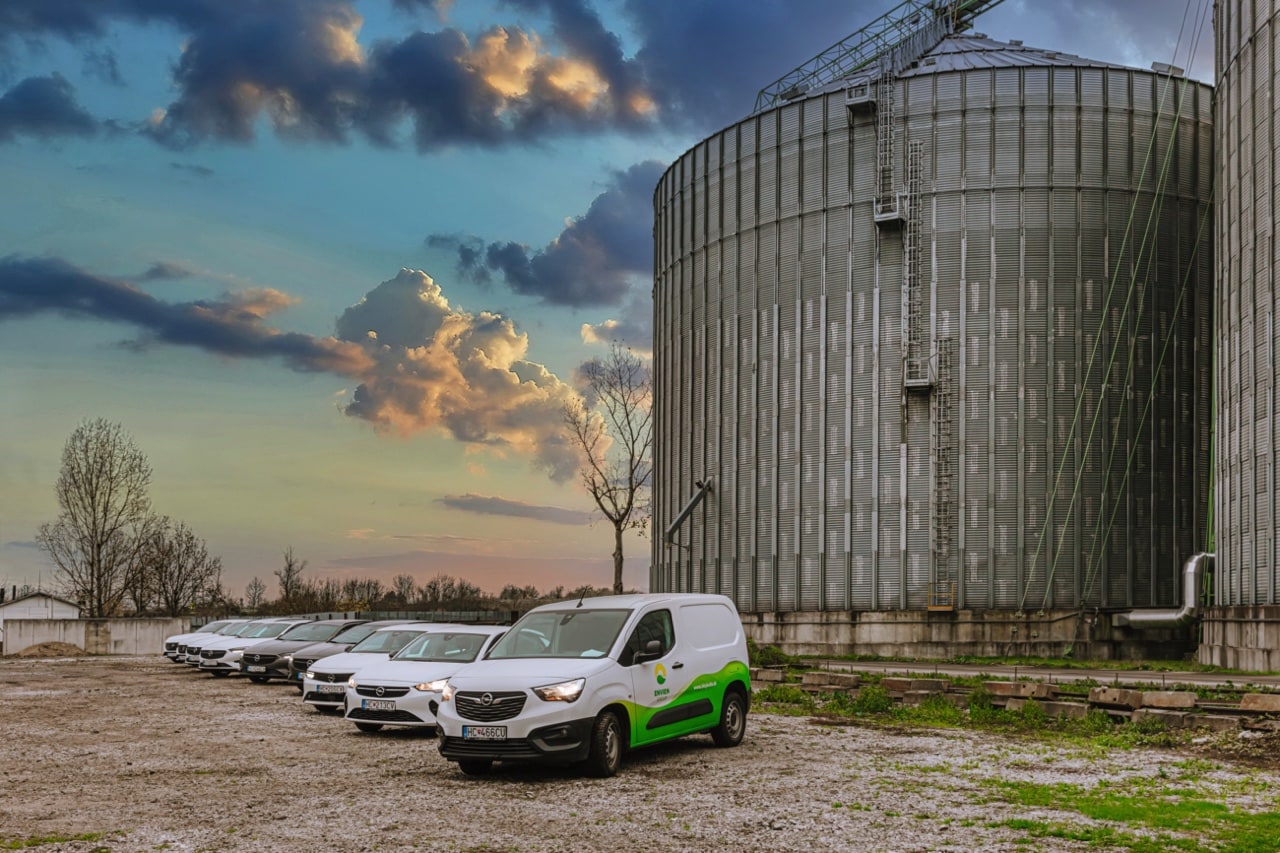
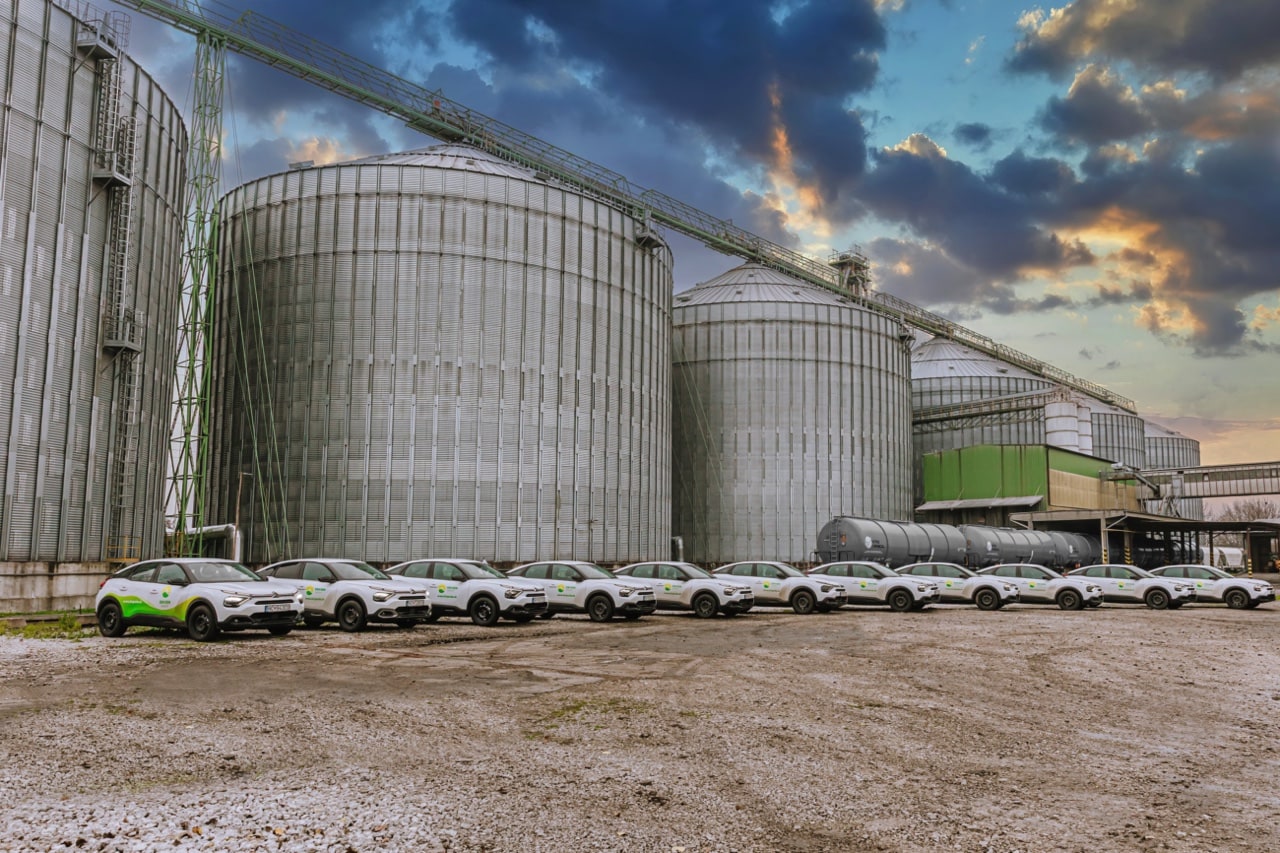
The B30 project started in 2021 as an ambition of the Slovak biofuel producer from Envien Group, in cooperation with Solar 2009 and Petroltrans, to demonstrate the instant solution for green mobility implementation in the car fleet.
The purpose of the project is to show that increased share of biofuels, such as B30 implementation, represents a feasible solution enabling fast greening of the passenger car sector. This is an effective way to reduce greenhouse gas emissions, and has positive influence on decreasing of transport emissions impact on air quality. The vision is based on successfully implemented B20 and B100 projects.
Project implementation might be quick and easy, as there are already vehicles on the market running on B30 fuel (containing up to 30% of biodiesel and about 70% of fossil diesel by volume), such as new types of diesel engine vehicles made by Peugeot, Citroën, Opel, and DS.
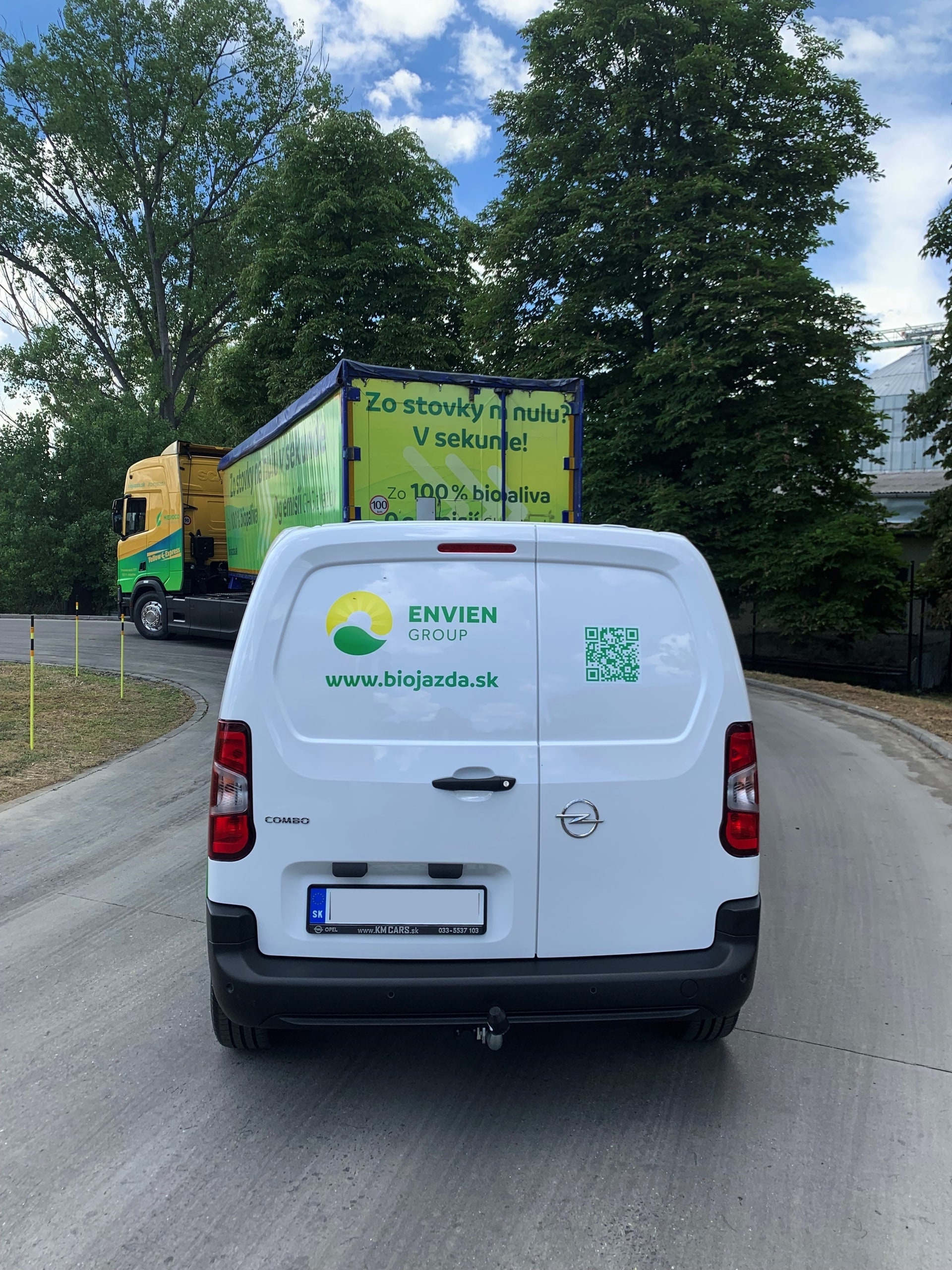
Envien Group has chosen vehicles from this portfolio, with the main aim of greening its internal fleet, becoming the first group of companies in Slovakia to do so. Envien Group is a leader in using B30-fueled cars in its fleet.





How does the project work?
For successful implementation, it was necessary to purchase new passenger cars and to install a separate fuel storage tank with B30 fuel dispenser located at the Solar 2009 filling station near Envien Group production plants in Leopoldov, Slovakia. The required fuel blend is being produced by the company Petroltrans in accordance with valid technical standards in Kežmarok, Slovakia, mixing 100% biodiesel from Envien Group production and conventional fossil diesel. B30 fuel is not yet commercially available in Slovakia. However, this project has a clear ambition of showing how simply to implement it progressively in individual companies’ car fleets, with later widespread implementation.
What is B30 fuel?
By volume, B30 fuel contains up to 30% of biodiesel, also known as FAME (fatty acid methyl ester), produced from various types of vegetable oils. The composition of feedstock oils for the final biodiesel production is determined by the availability of production technology and raw materials. Biodiesel can also be produced from used cooking oils and fats.
In Slovakia, biodiesel is produced by the company Meroco in Leopoldov, in accordance with technical standard STN EN 14214 and with significantly lower energy intensity compared to the production of fossil diesel by oil refining. In Meroco biodiesel production, most raw materials used are produced locally and have Slovak origin, with no need for import. Its zero waste biodiesel production creates the by-product of rapeseed meal, which is utilized as a high-value feed for livestock, therefore contributing to Slovakia’s food self-sufficiency. Biodiesel production is certified by the renowned company SGS according to the globally recognized ISCC certification scheme, with certification carried out in accordance with a strict environmental impact assessment.
The remaining 70% volume of B30 fuel composition consists of standard fossil diesel.
What can be expected during B30 fuel implementation in passenger cars?
B30 fuel represents an important pillar in the transport decarbonization scheme, and an appropriate way to meet commitments for achieving a 14% share of renewable energy in transport by 2030.
By replacing B7 fuel with B30 fuel in the Envien Group fleet, an astonishing reduction of approximately 12,500 m3CO2 emissions in just one year will be achieved. The replacement of the entire car fleet is planned by 2024.
According to project calculations, a passenger car running on B30 fuel can save an additional 45-50 kilograms of CO₂ emissions per 1,000 kilometers compared to B7 fuel.
Ecological diesel B20 and B30 banned in Slovakia
An amendment to the Regulation of the Ministry of Environment of the Slovak Republic No. 251/2023 Coll. on Fuel Quality entered into force on this year’s September 8, transposing the revision of the European Fuel Quality Directive (FQD) into Slovak national law, and abolishing the sale of diesel containing more than 10 % renewable diesel (FAME). This amendment effectively means a ban on the sale of B20 and B30 ecodiesel fuels, containing twenty or thirty per cent of bio-fuel.
The Ministry of Environment is obliged to apply this legislation despite the fact that the revision of the directive contradicts the declared objectives of the European Union regarding reduction of greenhouse gas emissions. Renewable fuels offer a proven, readily available, and versatile pathway to decarbonising road transport that works in practice — complementing other technologies with a flexible, technology-neutral approach.
However, the amendment to the regulation itself is based on a formalistic interpretation of the FQD Directive, neglecting its intended purpose, which remains to be the decarbonisation of transport and which cannot be achieved by banning or restricting carbon-neutral technologies. The aim of the Fuel Quality Directive is to protect consumers when selling fuels, while the B20 and B30 ecodiesels are intended mainly for use in corporate fleets. This is also reflected in the technical standards that regulate its quality. It is a paradox that the legislative package that set ambitious targets for decarbonizing transport also bans one of the available and established ways of achieving these targets.
It is also worth noting that several car models are available on the Slovak market that have been adapted and tested for B20 and B30 fuels by the manufacturer. The whole situation is slightly absurd, considering the fact that even after the amendment to the regulation enters into force, it will still be legal to sell 100 % biodiesel (B100), which also shall be used in specially adapted vehicle. However, the FQD does not consider B100 as diesel fuel, therefore restrictions do not apply to its sales.
As part of the Biojazda project, B20 and B30 fuels have been sold since 2021. During this period, more than 220,000 litres of B20 and B30 diesel were used, contributing to the reduction of greenhouse gas emissions in transport. Compared to standard diesel (B7), B20 fuel reduces emissions by more than 9 % per liter. In the case of B30, the savings reach up to 15 %. In practice, it is an affordable and cost-effective tool for decarbonizing road transport, proven under real operating conditions.
B100 fuel with proven emission savings of up to 70%, supplied by Envien Group member Meroco as part of the Biojazda.sk project, remains in pilot operation and is unaffected by recent changes.
Envien Group's perceives the implementation of the B30 project positively. Unfortunately, due to the imposed ban, it will be suspended indefinitely. The Slovak Biofuels Association 's (ZVVB, Združenie pre výrobu a využitie biopalív) future recommendations will also include a proposal to reconsider the ban on B20 and B30 fuels as part of the future revisions of the FQD directive.
Nenašli ste odpoveď na svoju otázku? Našli ste odpovede a máte záujem dozvedieť sa viac? Rozmýšľate o zavedení bionafty do vašej firemnej flotily?
Napíšte nám na info@biojazda.sk alebo použite kontaktný formulár nižšie.
Did you not find the answer to your question? Are you interested in learning more? Are you considering implementation of biodiesel in your company fleet?
Write to us at info@biojazda.sk or use the contact form below.